
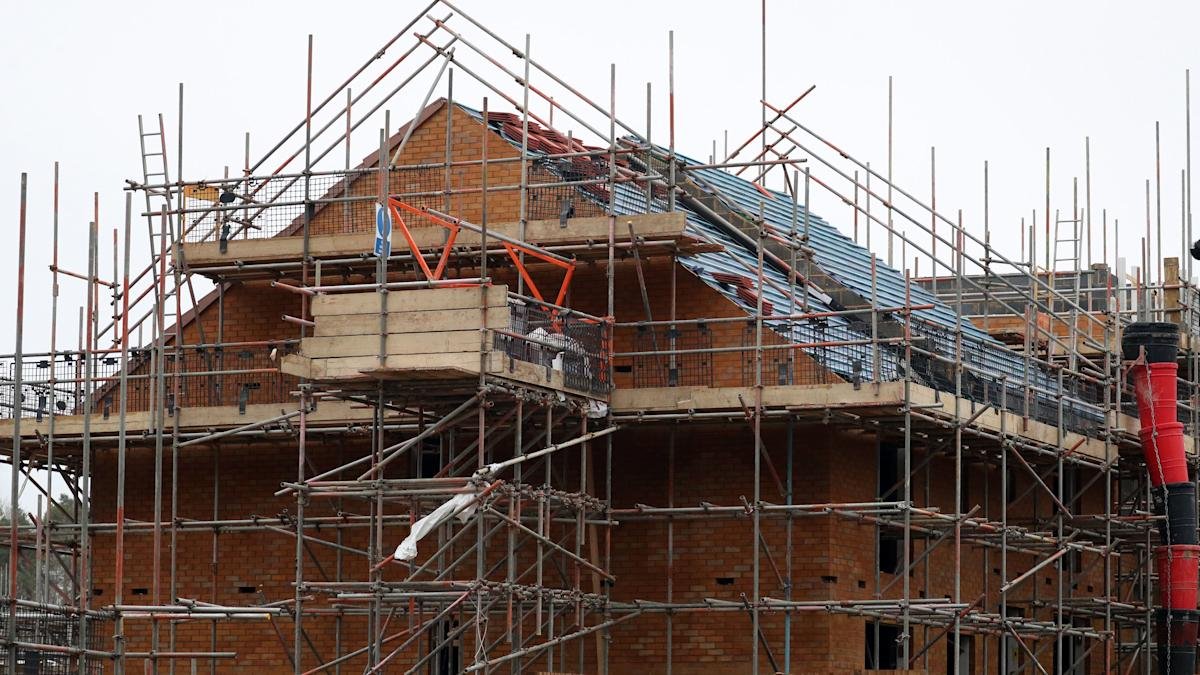
UK Housebuilding Slump: A Year-Long Decline
The UK housebuilding sector is experiencing a significant slump, with construction output declining for the twelfth consecutive month. This downturn has led to a decrease in new homes being built, exacerbating the country’s housing shortage. The construction sector’s struggles are attributed to various factors, including Brexit uncertainty and a shortage of skilled labour.
The National Housebuilding Council has reported a substantial drop in new home registrations, with a notable decrease in the number of homes being built in the private sector. This decline is expected to continue, with many housebuilders adopting a cautious approach due to the uncertain economic climate. The government’s efforts to boost the housing market have yet to yield significant results, leaving many would-be homeowners struggling to find affordable properties.
The housebuilding slump has far-reaching implications for the UK economy, with the construction sector playing a vital role in driving growth. The decline in construction output has resulted in job losses and reduced investment in the sector. To reverse this trend, the government must implement policies that address the root causes of the slump, including providing incentives for housebuilders and increasing funding for affordable housing initiatives.
Industry experts believe that the UK housebuilding sector will continue to struggle unless there is a significant shift in government policy. The current emphasis on Brexit negotiations has diverted attention away from the housing crisis, leaving many to wonder when the situation will improve. As the UK’s population continues to grow, the need for new homes becomes increasingly pressing, making it essential for the government to take decisive action to address the housebuilding slump.
The UK’s housing market is highly sensitive to economic fluctuations, and the current downturn has resulted in a decrease in housing transactions. The Royal Institution of Chartered Surveyors has reported a decline in housing market activity, with many surveyors predicting a further downturn in the coming months. To mitigate this trend, the government must work closely with the construction sector to develop policies that stimulate growth and increase the supply of new homes.
The housebuilding slump has significant implications for the UK’s economic growth, with the construction sector accounting for a substantial proportion of the country’s GDP. The decline in construction output has resulted in reduced economic activity, making it essential for the government to implement policies that support the sector. By providing incentives for housebuilders and increasing funding for affordable housing initiatives, the government can help to stimulate growth and increase the supply of new homes.
The UK housebuilding sector is likely to remain challenging in the coming months, with the ongoing Brexit uncertainty and skills shortage continuing to impact the industry. However, by working together, the government and the construction sector can develop policies that address the root causes of the slump and stimulate growth. This will require a coordinated effort, with all stakeholders working towards a common goal of increasing the supply of new homes and supporting the UK’s economic growth.
In conclusion, the UK housebuilding slump is a complex issue that requires a comprehensive solution. The government must work closely with the construction sector to develop policies that address the root causes of the slump, including providing incentives for housebuilders and increasing funding for affordable housing initiatives. By doing so, the government can help to stimulate growth, increase the supply of new homes, and support the UK’s economic growth.