
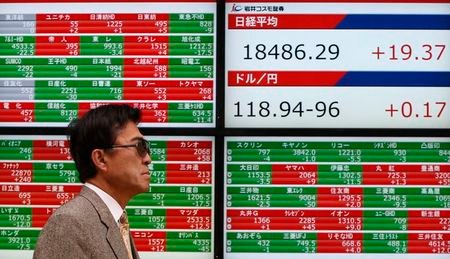
Asia’s Dynamic Markets: Tech-Driven Gains Amidst BOJ’s Historic Shift
Asian stock markets have recently demonstrated a robust performance, with a notable upturn driven primarily by a significant rebound in the technology sector. This positive momentum reflects renewed investor confidence in the region’s economic resilience and innovation capacity. The sentiment was further shaped by a widely anticipated monetary policy shift from the Bank of Japan, adding a new dimension to the global financial landscape.
The resurgence in technology stocks across Asia has been a pivotal factor underpinning broader market gains. Following periods of volatility, investors are increasingly turning to growth-oriented tech firms, buoyed by promising earnings reports and an optimistic outlook for advancements in artificial intelligence. This renewed interest signals belief in the sector’s long-term growth trajectory.
This technological resurgence isn’t confined to a single market; rather, it’s a broad phenomenon impacting key regional players. From chip manufacturers in Taiwan and South Korea to innovative software and e-commerce giants, the tech rally reflects widespread optimism. Such interconnected growth highlights Asia’s crucial role in the global technology supply chain and innovation.
Adding another layer of interest to financial narratives, the Bank of Japan (BOJ) made a significant announcement regarding its monetary policy. As widely expected by market analysts, the central bank opted to hike its key interest rates, moving away from its long-standing ultra-loose policy stance. This decision marks a historic turning point for Japan’s economy.
The expectation surrounding the BOJ’s rate hike had been building, primarily fuelled by persistent inflationary pressures and a gradual, yet consistent, increase in wage growth within Japan. Policymakers have closely monitored these indicators, signalling a readiness to normalise monetary conditions after decades of deflationary battles. The move demonstrates confidence in Japan’s economic recovery.
Immediately following the BOJ’s announcement, the Japanese Yen experienced some volatility against major currencies, albeit within expected parameters, as the market had largely priced in the policy adjustment. Japanese equities generally absorbed the news without significant disruption, underscoring the preparedness of investors for this long-awaited shift. This highlights market maturity.
The BOJ’s decision holds considerable weight for global financial markets, as Japan has long been a significant source of global liquidity due to its low interest rates. While the immediate impact on global capital flows remains to be fully assessed, the move signals a potential shift in the global yield landscape. This normalisation could influence investment strategies worldwide.
Beyond the tech rebound and BOJ policy, other macroeconomic factors continue to influence Asian markets. China’s economic performance, in particular, remains a critical determinant, with ongoing efforts to stimulate domestic demand and stabilise key sectors. Global trade dynamics, geopolitics, and commodity prices also play significant roles.
Investor sentiment across Asia appears cautiously optimistic, balancing growth prospects with existing global uncertainties. The region’s diverse economies, coupled with a young, dynamic population and increasing domestic consumption, offer compelling long-term investment narratives. However, vigilance against external shocks will be crucial for sustaining this positive trajectory.
In conclusion, the recent uplift in Asian stock markets, spearheaded by a vibrant technology sector, presents an encouraging picture for regional and global investors. Coupled with the Bank of Japan’s pivotal rate hike, these developments underscore a dynamic and evolving financial landscape. Navigating these currents will require careful analysis, yet Asia’s economic resilience remains a powerful draw.